By continuing your navigation on this website, you accept the use of cookies for statistical purposes.

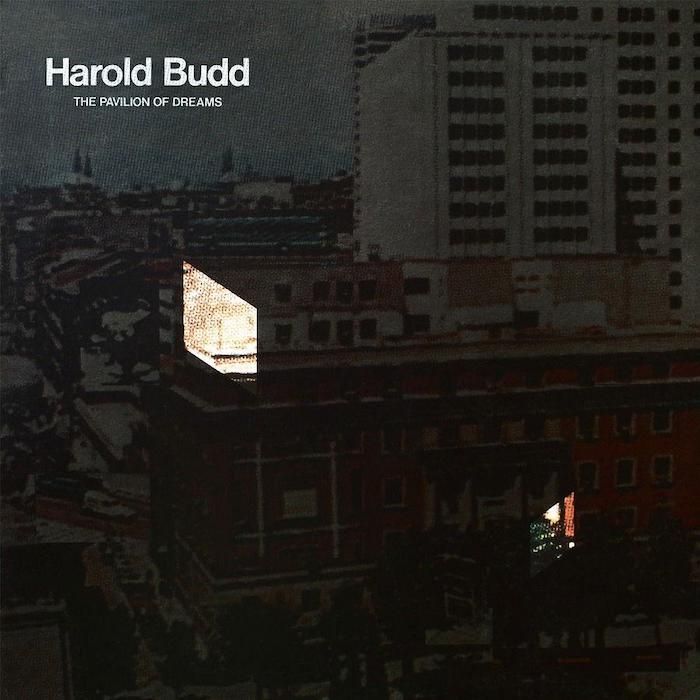
Harold Budd
The Pavilion Of Dreams
For five decades, Harold Budd stood on the forefront of the West Coast avant-garde. Born in Los Angeles, he studied with Schoenberg-pupil Gerald Strang and began teaching at CalArts in 1970. While searching for his own voice, he was influenced as much by abstract expressionist painters as by John Cage and Morton Feldman. In his work, Budd brought delicate, slowing-moving melodies to the foreground – creating a new musical language based on "eternally pretty music" and smooth surfaces.
In the early '70s, Budd started an extended cycle of compositions that would comprise The Pavilion Of Dreams. For Budd, the album was a signpost for a new direction in thinking about music: "The Pavilion Of Dreams erased my past. I consider that to be the birth of myself as a serious artist. It was like my Magna Carta."
Produced by Brian Eno in 1978, The Pavilion Of Dreams stands toe-to-toe with another minimalist masterpiece also released that year, Steve Reich's Music For 18 Musicians. Budd's gorgeous pieces reveal a lightness of touch that draws the listener in, while sublime voices float in and out as if in a recurring dream. Featuring saxophonist Marion Brown and multi-instrumentalists Gavin Bryars and Michael Nyman, The Pavilion Of Dreams remains a master class in exquisite timbre and shimmering texture.
𝙏𝙝𝙚 𝙋𝙖𝙫𝙞𝙡𝙞𝙤𝙣 𝙊𝙛 𝘿𝙧𝙚𝙖𝙢𝙨 𝙬𝙖𝙨 𝙗𝙤𝙩𝙝 𝙩𝙝𝙚 𝙛𝙞𝙣𝙖𝙡 𝙧𝙚𝙡𝙚𝙖𝙨𝙚 𝙤𝙣 𝙀𝙣𝙤'𝙨 𝙊𝙗𝙨𝙘𝙪𝙧𝙚 𝙞𝙢𝙥𝙧𝙞𝙣𝙩 𝙖𝙣𝙙 𝙖 𝙩𝙧𝙖𝙣𝙨𝙞𝙩𝙞𝙤𝙣 𝙥𝙤𝙞𝙣𝙩 𝙩𝙤𝙬𝙖𝙧𝙙𝙨 𝙝𝙞𝙨 𝙨𝙚𝙢𝙞𝙣𝙖𝙡 𝙖𝙢𝙗𝙞𝙚𝙣𝙩 𝙨𝙚𝙧𝙞𝙚𝙨. 𝙏𝙝𝙞𝙨 𝙛𝙞𝙧𝙨𝙩-𝙩𝙞𝙢𝙚 𝙧𝙚𝙞𝙨𝙨𝙪𝙚 𝙞𝙨 𝙧𝙚𝙘𝙤𝙢𝙢𝙚𝙣𝙙𝙚𝙙 𝙛𝙤𝙧 𝙛𝙖𝙣𝙨 𝙤𝙛 𝙍𝙮𝙪𝙞𝙘𝙝𝙞 𝙎𝙖𝙠𝙖𝙢𝙤𝙩𝙤, 𝙅𝙤𝙣 𝙃𝙖𝙨𝙨𝙚𝙡𝙡 𝙖𝙣𝙙 𝙈𝙖𝙧𝙠 𝙃𝙤𝙡𝙡𝙞𝙨.
A1
Bismillahi ´Rrahmani ´Rrahim
B2
Juno